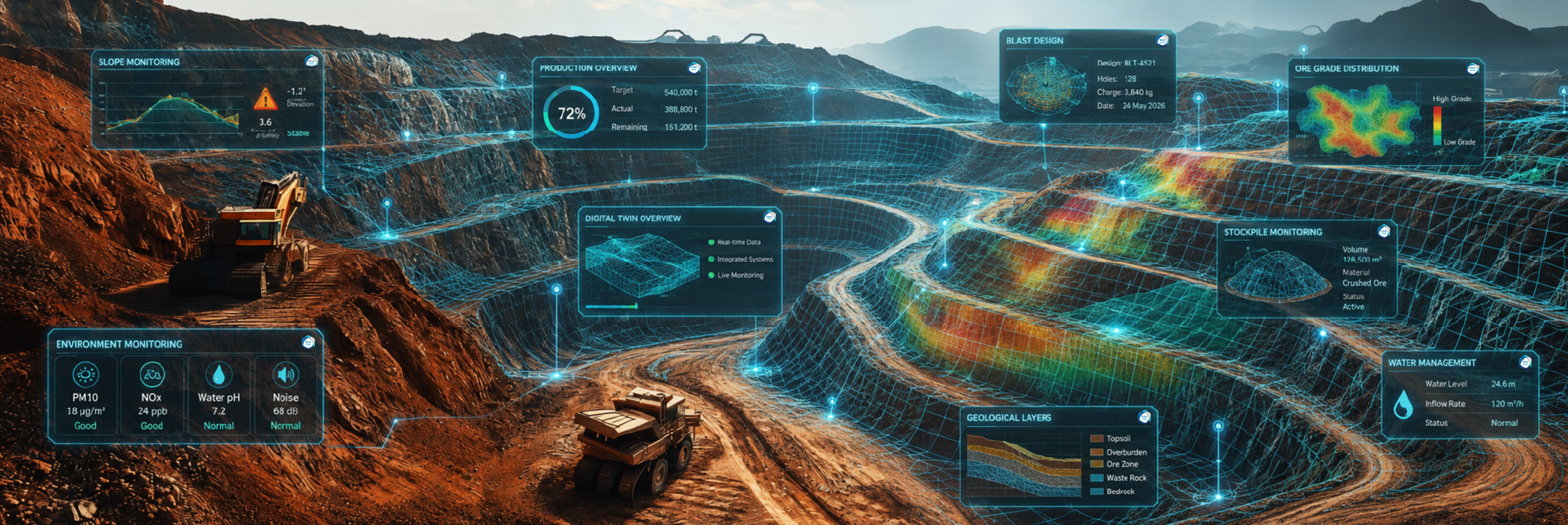
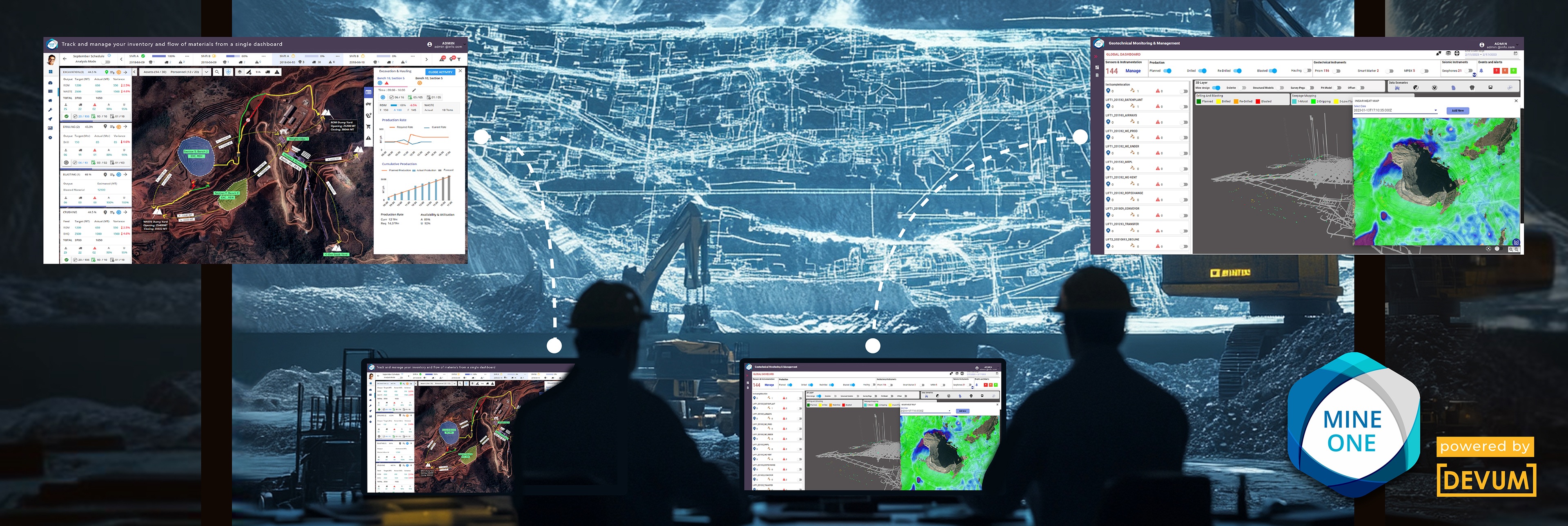
How AI-Powered Mining Software Is Transforming Mining Operations
Pratyush Bhowmik
•
November 25, 2026
Industry Insights Tech & Innovation
TL;DR
When a shift misses its production target, AI-powered mining software can help supervisors check the shortfall and see whether equipment downtime or longer haul cycles warrant a closer look. Generative AI makes it easier to ask questions about production records or find guidance in approved site procedures. Predictive models can help maintenance teams assess equipment failure risk when reliable equipment histories and condition data are available and the models are validated under site conditions.
AI readiness varies by workflow. A document assistant can start with approved manuals and access controls. An AI application that draws on production, fleet and maintenance records needs those systems to agree on equipment IDs, timestamps and shift boundaries. The article’s digitalisation maturity curve shows how mines can build from reliable records and established systems to connected data, trusted analytics and targeted AI adoption. Reactore’s MineOne® supports that progression by connecting workflows and letting mines configure AI around their data and access permissions.
AI-powered mining software combines mining applications with models that analyse data, recognise patterns, generate responses or support recommendations. It works with information such as production records, equipment telemetry, maintenance histories and operating procedures.
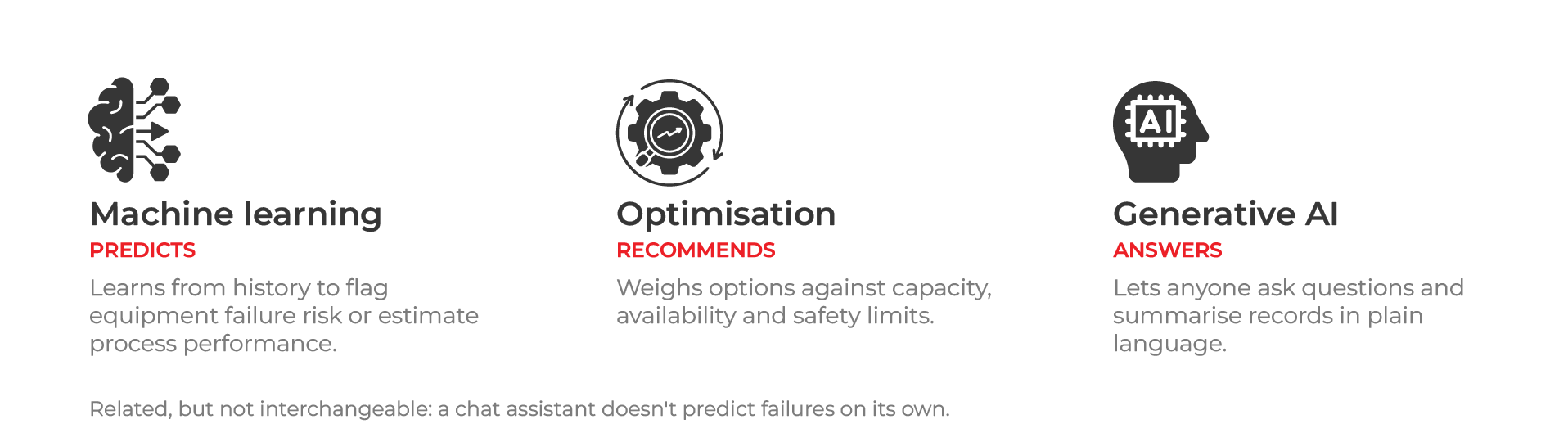
Several forms of intelligence can contribute to the same operation.
Machine learning learns patterns from data. In mining, predictive models can help assess equipment failure risk or estimate process performance. They need suitable historical information and validation against operating conditions.
Optimisation and decision support help teams assess alternatives against objectives and constraints. Applications can include allocating equipment or adjusting processing conditions. An effective recommendation must account for practical limits, including capacity, equipment availability and safety requirements.
Generative AI helps people ask questions, summarise information and navigate knowledge in natural language. Within mining operations management software, this can make existing information accessible to more people without requiring specialist reporting skills.
These capabilities are related, but they are not interchangeable. A conversational assistant does not automatically predict failures or control equipment. Likewise, calculating production variance does not itself require AI. The additional value comes from making information easier to interrogate, interpreting patterns and supporting decisions within an operational context.
A sound implementation connects several steps. The application retrieves authorised information, applies the required calculations and supplies relevant context to the AI. It then presents an answer or recommendation within the user’s workflow. Defined reporting logic should calculate operational totals and variances. The language model helps interpret the request and communicate the result, keeping numerical reporting grounded in the underlying system.
The digitalisation maturity graph for AI in mining
A mine cannot move from fragmented records to dependable operational AI simply by adding a model. Established systems, reliable processes and people with the right skills provide the foundation for effective adoption.
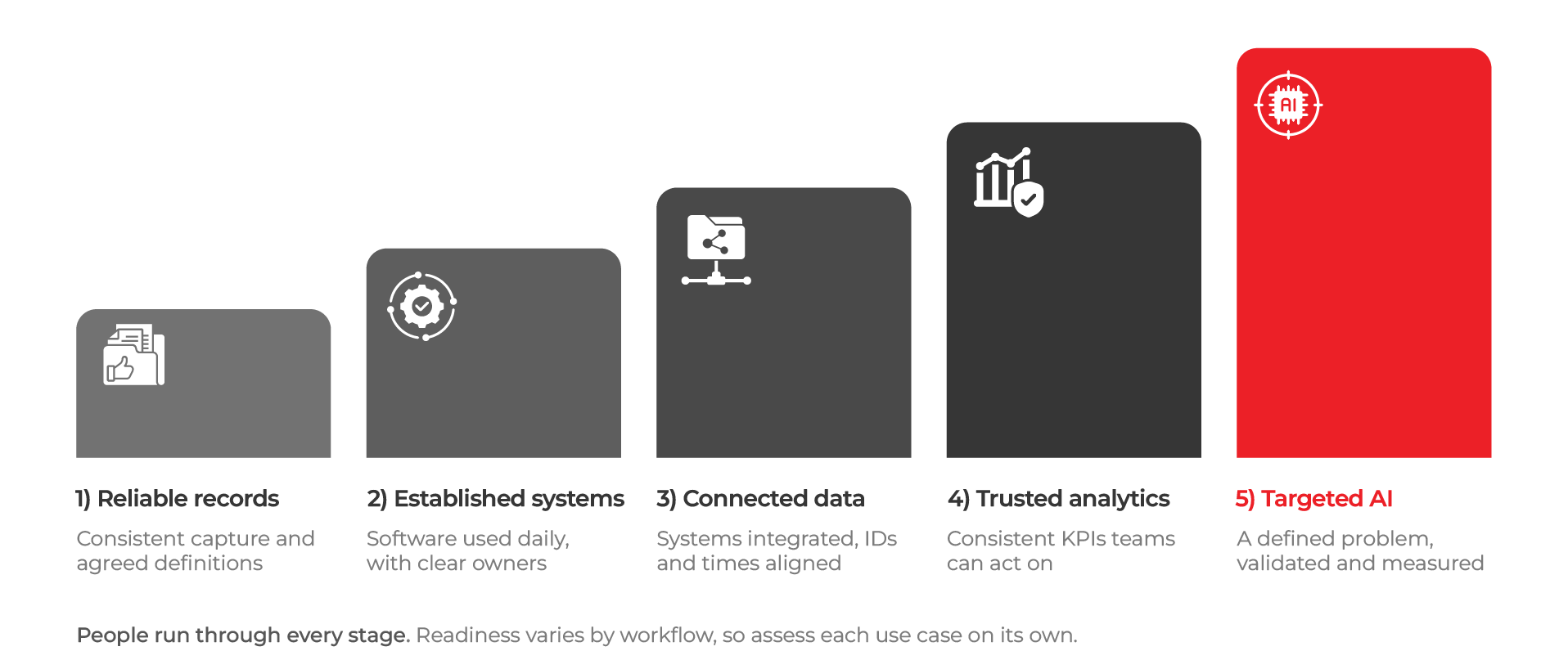
The Global Mining Guidelines Group highlights varying maturity across mines and the importance of strong data foundations. A practical way to understand this journey is through the following digitalisation maturity curve.
Digitalisation Maturity Graph in Mining for AI
Illustrative progression, not a formal scoring model. Readiness varies by workflow and intended AI application.
Reliable digital records. Capture production, fleet activity, inspections and maintenance consistently. Agree on definitions, responsibilities and recording practices so teams can trust the information collected.
Established digital systems. Embed software into daily workflows, with clear ownership, support and access controls. Systems must work under site conditions and teams must use them consistently.
Connected operational data. Integrate the relevant systems and align equipment identifiers, timestamps and reporting periods. This allows teams to compare information across operational functions.
Trusted operational analytics. Use consistent KPIs and reporting to investigate performance. Build the skills to interpret results, question anomalies and translate findings into operational action.
Targeted AI adoption. Introduce AI for a defined problem once the required information, skills and controls are in place. Validate results, measure value and expand successful applications.
People development runs through every stage. Operators need confidence with digital workflows; supervisors need data literacy; IT teams need integration and governance skills. Predictive applications also require modelling expertise and mining specialists who can assess whether outputs make operational sense. Leadership must provide ownership, training and time for adoption.
This progression need not happen uniformly across the whole mine. A document assistant may start with approved manuals and access controls. Predictive maintenance requires suitable equipment histories, condition data and model validation. Assess the foundations required for each use case before choosing the next investment.
How AI improves everyday mining decisions
Mining decisions depend on recognising a change, understanding its significance and choosing a response. Different AI capabilities can support each stage, reducing the effort between observing a problem and investigating it.
Making operational information easier to use
Dashboards provide a consistent view of known indicators. Managers also need to investigate questions that arise during a shift, often across several reporting areas.
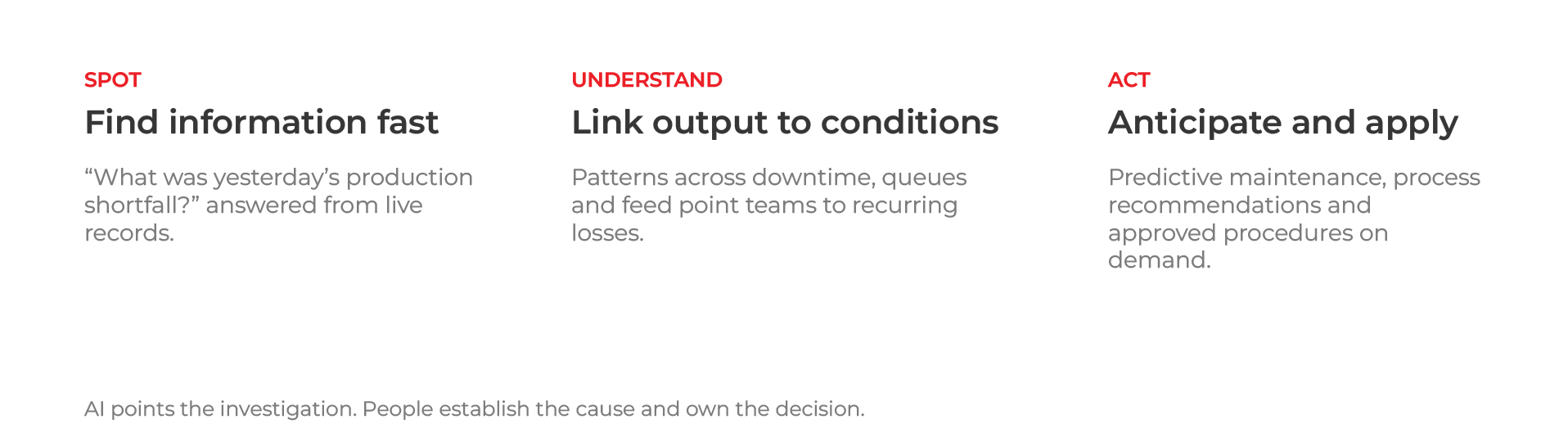
Generative AI in mining can help users retrieve and summarise relevant information through a conversational interface. A supervisor might ask, “What was yesterday’s production shortfall?” The answer draws on the relevant records and calculations, giving the discussion a clear starting point.
This improves access to mining operational intelligence. Managers can spend more time considering the implications of information and less time locating reports or requesting extracts.
Connecting performance with operating conditions
A production figure becomes more useful when teams consider the circumstances behind it. Equipment downtime, loading queues and changes in material feed can affect performance differently.
AI-based analysis can help identify patterns across these variables when suitable data and models are available. That supports a more focused investigation into recurring losses and potential improvements.
For example, repeated increases in haul-cycle time may warrant reviewing loading delays, road conditions and equipment availability together. Identifying an association helps direct the investigation; operational teams establish the cause.
Decisions must also account for competing objectives. Assigning more trucks to a shovel may increase queues if loading capacity is already constrained. Raising plant throughput may affect recovery when feed characteristics change. The purpose of mining analytics is to help teams assess these relationships against the operation’s priorities. A local performance gain only becomes useful when it supports the wider production objective.
Anticipating issues and applying knowledge
Predictive analytics in mining can support earlier intervention by estimating how equipment or processes may behave. Predictive maintenance in mining applies this approach to equipment condition and failure risk. Decision-support systems can then help operators assess adjustments.
BHP’s collaboration with Microsoft at Escondida illustrates this approach. BHP described combining concentrator data with AI recommendations to help operators adjust variables affecting copper recovery.
Knowledge assistance serves a different need. Asking, “What checks does our approved procedure require?” can help personnel find relevant guidance quickly. Together, these approaches support more informed work, with operational decisions remaining subject to established controls and human responsibility.
Why connected data is essential for AI in mining
Mining workflows extend across production, fleet, maintenance, processing and logistics. A useful AI solution needs information that reflects those relationships.
Integration brings relevant records together, while data preparation makes them comparable. Equipment identifiers, units, timestamps and shift boundaries must align. Otherwise, a daily production total and a shift target may describe different reporting periods.
Data freshness matters too. An uploaded report describes conditions at the time of reporting. Connected operational systems can provide more recent information, subject to their update frequency and site connectivity.
This is why integrated mine management is central to mining digital transformation. It establishes shared operational information that applications, dashboards and AI capabilities can use consistently.
The same logic extends to pit-to-port mining logistics. Understanding a production delay becomes commercially valuable when teams can connect it with stock availability and delivery commitments.
How RAG brings site knowledge into mining software
Retrieval-augmented generation, or RAG, retrieves relevant content from selected knowledge sources and supplies it to an AI model when generating an answer. This grounds responses in information specific to the organisation.
For a mine, those sources might include equipment manuals, approved procedures, process documents and application guidance. RAG helps an assistant respond using that material rather than relying only on general knowledge.
Microsoft’s RAG guidance distinguishes this retrieval approach from model fine-tuning. Updating application knowledge does not necessarily mean retraining the underlying model.
Document retrieval and operational data access serve complementary purposes. A procedure explains how a task should happen; production and fleet records describe what has happened. Connecting the appropriate source to each question makes AI assistance more relevant to daily work.
How Reactore brings AI into connected mining operations
Reactore’s approach starts with the mining operation: its workflows, existing systems and the information people need to do their jobs. MineOne connects capabilities across production, fleet, assets, safety and other site processes. This gives configurable AI a practical operational foundation. It also supports a staged digitalisation journey: establish dependable workflows, connect relevant information and introduce AI where the operation is ready. The starting point should reflect the mine’s existing systems, data quality and team capabilities.
Reactore’s multi-site bauxite mining case study describes connecting operations across 27 mining leases, including integration with SAP ERP, Datamine and weighbridges. The digital implementation delivered reported improvements of 30–40% in dispatch transaction speed.
These results demonstrate experience in connecting mining systems and improving workflows. They establish a foundation for AI capabilities that draw on operational information across the mine.
For IT leaders, this approach provides a way to extend existing technology investments. Data connections and configurable applications can bring relevant information into a shared workflow while established systems retain their operational roles.
2. Configuring intelligence around the mine
Reactore can configure AI capabilities within its mining solutions using connected operational records, uploaded documents or both, depending on the selected plan and implementation scope.
The configuration can reflect site terminology, reporting structures and the questions different teams need answered. A production manager may focus on tonnes against plan, while a maintenance team needs equipment information and operating guidance.
Access permissions form part of the design. Information access can follow the organisation’s defined roles and responsibilities, which matters when operations, contractors and corporate teams share an application environment.
3. Making knowledge available where teams work
Persistent application knowledge supports recurring questions through documents configured at application level. Temporary uploads allow users to ask questions about a specific file during their current chat session.
These options support both shared operating knowledge and individual information needs. Teams can shape assistance around their processes instead of repeatedly explaining site context with every question.
Devum provides the underlying platform for configuring these applications. For the mining business, the benefit is adaptable software: operational workflows, integrations and AI assistance can be designed around the same requirements. This supports a focused starting point and room to expand as needs develop.
Where should a mine start?
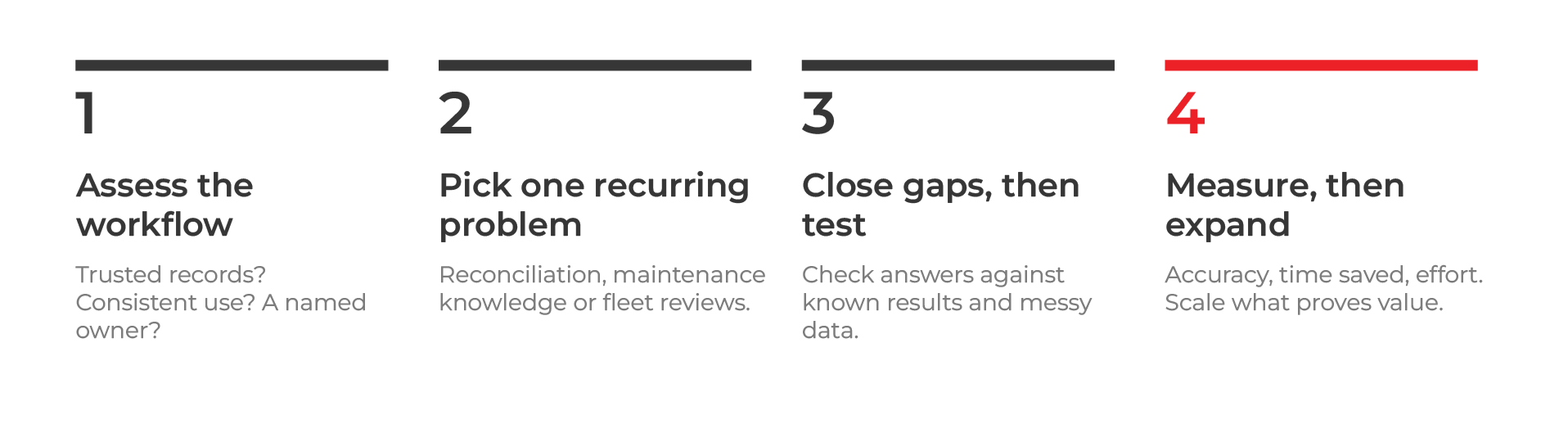
Start by assessing the maturity of the workflow you want to improve. Can teams trust its records, use its systems consistently and interpret its reports? Assign an operational owner and involve IT and the people who will use the solution. Then choose a recurring problem with measurable impact. Production reconciliation, retrieving maintenance knowledge or reviewing fleet activity can provide manageable starting points.
Identify gaps in data capture, connectivity, access controls and skills. Close the gaps that affect the chosen application before introducing AI. Where these foundations are ready, test representative questions against known answers, including incomplete records and differing reporting periods.
Measure answer accuracy, time spent retrieving information and the effort needed to complete the workflow. For predictive applications, evaluate model performance under site conditions before relying on its recommendations.
Expand when users can demonstrate practical value and the team can support the application reliably. AI-powered mining software earns its place when it helps people understand the operation and respond effectively. That is how connected data and accessible knowledge translate into progress in everyday mining work.
Frequently asked questions
What are the benefits of AI in mining?
AI can improve access to operational information, support equipment and process analysis, and help teams investigate performance. Benefits depend on the application: conversational assistance reduces information-search effort, while validated predictive models support earlier intervention.
How does AI-powered mining software differ from traditional software?
Traditional mining software captures records, manages workflows and presents reports. AI capabilities add pattern analysis, predictions or natural-language interaction. They complement those functions, helping users explore information and evaluate operational questions more effectively.
Can AI answer questions about mining production and fleet performance?
Yes. A configured solution can use connected records or uploaded reports to answer relevant questions. Production comparisons require aligned targets and actuals, while fleet analysis depends on the activity and equipment data available.
Can AI integrate with existing mine management systems?
Yes. Integration can connect AI capabilities with existing production, fleet, maintenance and enterprise systems. Implementation must address interfaces, data consistency, update frequency and access permissions so answers reflect the intended operational context.
How digitally mature must a mine be before adopting AI?
Readiness depends on the use case. The relevant workflow needs reliable information, established processes, appropriate access controls and people able to evaluate results. A mine can introduce focused AI applications while improving digital maturity elsewhere, provided those foundations support the chosen scope.
Can Reactore customise AI for surface and underground mines?
Reactore can configure AI assistance around the workflows, data and knowledge requirements of surface and underground operations. The selected solution scope determines the integrations, information access and questions it supports.
Find out where AI can work for your mine
Every operation is at a different point on the digital maturity curve, and readiness varies from one workflow to the next. Reactore offers a free readiness consultation to help you see where you stand.
In one session, our mining and integration specialists will:
Review your current systems, data and workflows
Identify the gaps that would hold back AI adoption
Pinpoint practical, high-value opportunities to start with
You’ll leave with a clear view of what’s ready now, what needs work first, and where AI could deliver measurable value.
Reactore MineOne isn’t just a software platform; it’s a game-changer. It transformed our mining operations, making them more efficient, cost-effective, and sustainable. We highly recommend Reactore MineOne to any mining company looking to stay ahead in this competitive industry.
Andrew Coleman
Chief Operations Officer
Global Minerals Corporation
Book a Demo
Experience Minone First-hand!
Thank you! Your submission has been received!
Oops! Something went wrong while submitting the form.
Devum saved our team time and money! Before Devum, software development was slow and expensive. Devum's low-code platform cut development time in half and lowered costs. Their easy-to-use platform and helpful support got us up and running quickly. Now we can focus on innovation and launch products we once thought impossible. Devum is more than just software, it's a partner that helped our business grow.
Alex Rivera
Chief Technology Officer
Innova Digitalisation Systems
Request a FREE Trial
Join the Low-code Revoultion Now. Claim Your FREE Trial!
Thank you! Your submission has been received!
Oops! Something went wrong while submitting the form.
RAMJACK Technology Solutions Having worked closely with the Reactore team over the past 5 years I can attest to their proactive, ‘can-do’ attitude. Not only is the MineOne platform an incredibly powerful tool for the mining industry; the team’s focus on the client’s specific requirements drives closer engagements and a longer lasting relationship. Reactore is fundamental in bringing together and visualising technology integration into a difficult environment
Rupert Birch
Vice President EMENA
RAMJACK Technology Solutions
Get in Touch
Join Hands for a Digital Transformation journey with Reactore!
Thank you! Your submission has been received!
Oops! Something went wrong while submitting the form.
Our partnership with Reactore, established in 2015, has been instrumental in designing and implementing innovative mining compliance systems. Their seamless approach translates complex regulations into user-friendly solutions, ensuring a smooth journey from concept to real-world application. This collaboration has consistently benefited LCS by allowing us to deliver superior value to our clients. Their ability to convert complex concepts into solutions that appear simple to the end user really is the ultimate sophistication!
Jaco Swartz
Managing Director
LCS (Pty.) Ltd.
Become a Partner
Join Our Partner Network
Thank you! Your submission has been received!
Oops! Something went wrong while submitting the form.